
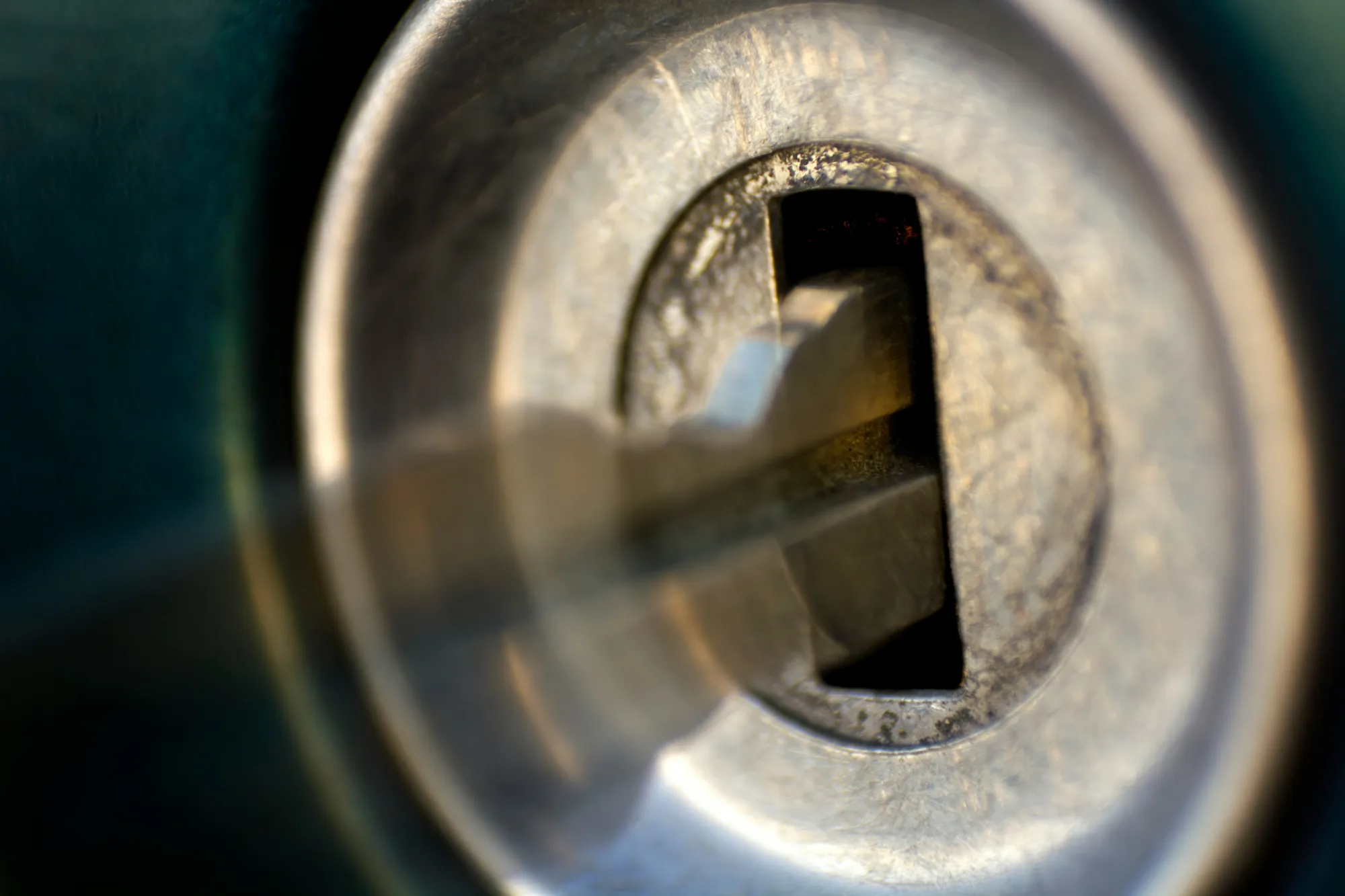
Stop pulling hard. Turn the key back to exactly where it was when it went in, ease the strain on the lock by pushing or pulling the door firmly into the frame, then wiggle the key gently while drawing it straight out. If it still will not move, get help before it snaps.
In a standard cylinder lock, the key only comes out at the position where it went in, because only there can the pins rise and let the key slide past. If the key is a few degrees off, it feels stuck. Turn it back slowly until it sits exactly as it did when you put it in, and try again.
On a uPVC or composite door, the bolts may be catching on the frame and loading the lock. Push the door firmly shut, or pull it towards you, so the bolts are not under strain, then try the key again. If the key only comes out with the door pushed or pulled, the door needs adjusting before the strain breaks a key.
Wiggle the key gently up and down while drawing it straight out. Do not lever it sideways or hang your weight on it, because a stuck key that snaps becomes a broken key job. If you use a spray, choose one made for locks and use a little. Heavy oil and general sprays tend to collect dirt inside the cylinder.
Keys usually stick for a reason: a worn or badly cut copy, a dirty or dry cylinder, a bent key, or a door that has dropped. Once it is out, use the best key you have, ideally an original, and if the lock still binds, have it looked at before the next key snaps in it.
If it will not come free, send your job through the form or the chat and say what sort of door it is. If the key snaps while stuck, removing it is £85 by day, £120 in the evening and at weekends and £150 at night, and the price is fixed before we set off.
Useful next steps
Related questions
- Why do keys break in locks?
- How to take a broken key out of a lock?
- Why does my uPVC door lock when I open it but not when I close it?