
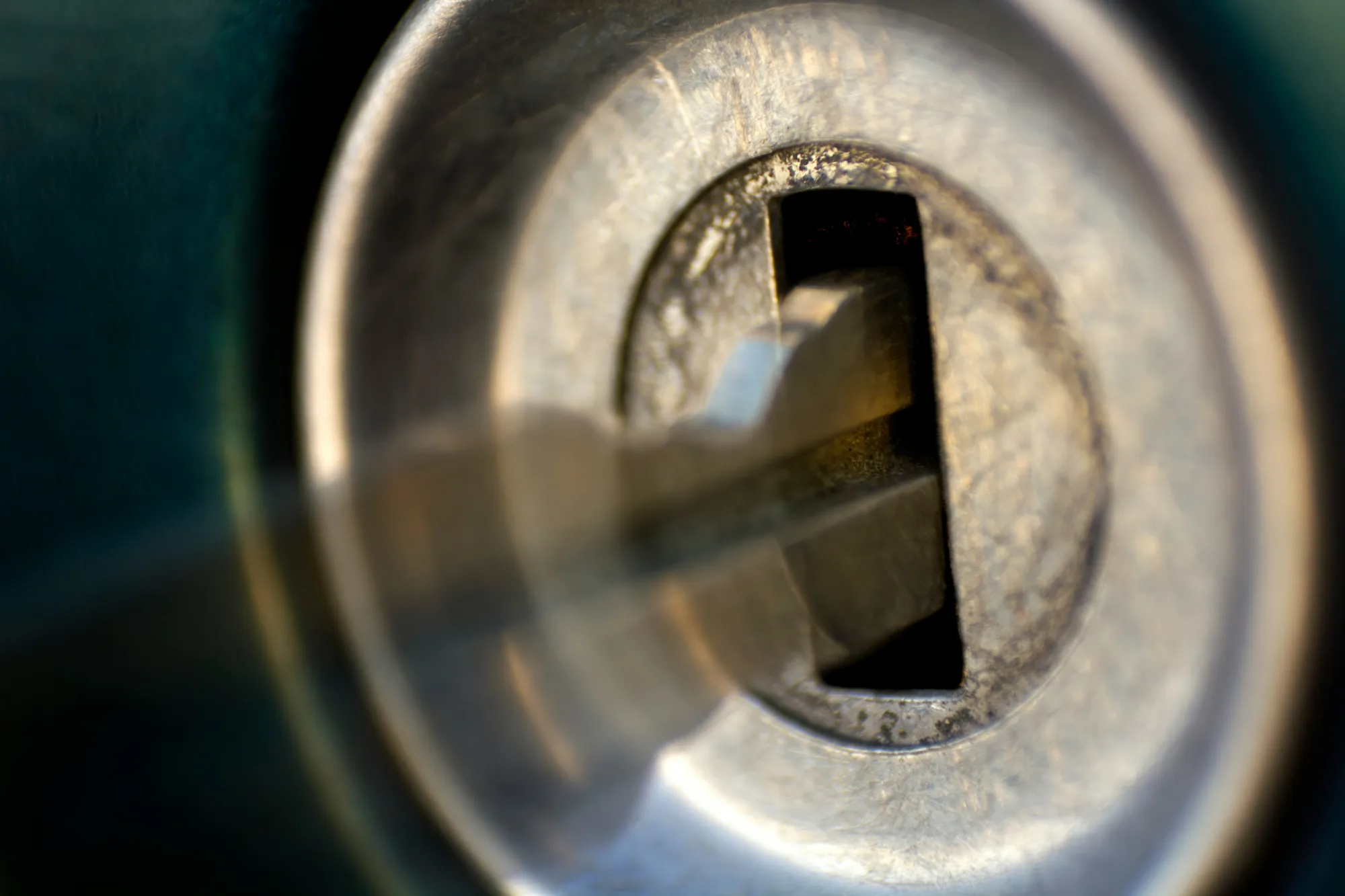
If enough of the key sticks out to grip, fine pliers can sometimes draw it straight out, as long as you pull without turning. If it has broken flush or deeper, stop, because probing and turning tend to push it further in. A locksmith can usually get it out, often without replacing the lock.
First, leave the lock as it is. Do not turn it back with the half you are holding, and do not try the spare key. The broken piece sits among the pins inside the cylinder, and every push or turn can move it deeper. Keep both halves of the key, because a new key can often be cut from them.
If a clear piece of metal sticks out past the face of the lock, fine needle nose pliers or strong tweezers can sometimes grip it. Hold it firmly and pull straight back along the keyway, slowly, without twisting. If the jaws slip or the piece will not move, stop. Gripping a tiny edge tends to snap it off flush, and then it is harder to reach.
What makes it worse: superglue on a matchstick, screws, paperclips, heavy oil and force. Glue can set on the pins and turn a simple removal into a new lock. The Master Locksmiths Association warns that trying it yourself can push the piece further in and damage the inside of the lock, which can mean replacing it.
A locksmith uses extractors: thin steel blades with a small hook or teeth that slide in beside the piece and catch its cuts. The same MLA guide says a key snapped in a working lock should, as a rule of thumb, take no longer than half an hour to remove. A worn or damaged lock can take longer.
We remove a snapped key for £85 by day (8am to 6pm weekdays), £120 in the evening and at weekends and £150 at night (10pm to 8am). That includes travel and up to one hour on site. Send your job through the form or the chat, and the price is fixed before we set off.
Useful next steps
Related questions
- Is there a tool to get a broken key out of a lock?
- How do you get a broken key out of a lock with a paperclip?
- Can I get a key cut from a snapped key?